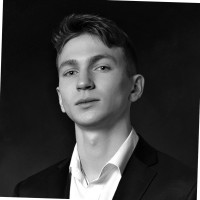
I've spent 9 years building performance creative systems that profit. My work has touched startups, regulated categories, direct-to-consumer brands, live events, and businesses I've built myself.
I am intensely AI enabled building infrastructure for research, brief development, performance analysis, and agent-assisted management of daily work.
Creating campaigns is only half the job. The other half is building the systems that make every next ad cheaper, sharper, and faster to ship.
I study what people believe, trust, and want before a single format or message is chosen. My insights come from deep social listening, customer interviews, reviews, creators, and operators — all people I listen to carefully to speak to customers in a way that feels understood by the brand.
Three principles that show up in every engagement.
I'm a business operator at heart. What I'm most curious about is what makes a business tick — or what makes a funnel bleed, and today we have the answer in performance data. At the end of the day it comes down to people: how they feel engaging with a brand and whether the thing actually helps them with what they are hiring it for. When you get that right, the customer wins and the business wins. Nobody feels like they were sold to, but helped.
That's the bar I work toward and creative marketing is the best lever.
I grew up in the Hudson Valley surrounded by entrepreneurs and artists. Watching the people around me create, build, and sell things to make a life wasn't a career path I chose — it's just what people did.
I started in digital marketing running Snapchat geofilters for Main Street businesses in 2016, then dropshipping stores selling nationwide from the back of high school classes. Advertising clicked when I realized these tools aren't best used as a megaphone — they're most powerful as a mirror. You show people what they already believe and let them feel seen. The traffic was working but at that time small businesses didn't have the infrastructure to convert it, so I learned the rest of the funnel. Landing pages, CRO, email, SMS, copywriting, and every model and audience I could research. The whole stack, in the order each piece broke. I've carried those learnings into every engagement over the past 9 years.
Eventually I started pointing the marketing at things I could own end-to-end — my own contracting company, then Shmuck's Sweet Stuff, and other businesses where I could use the skillset to scale things no one else had the patience to test or learn.
I'm a Performance Creative Strategist at Mojo now, an AI sexual wellness brand — a category where you can't be lazy with any part of the funnel. When an ad lands here it's because you actually understood something most people won't say out loud. It's some of the work I'm most proud of.
Always curious about the next platform, strategy, or challenge worth solving.
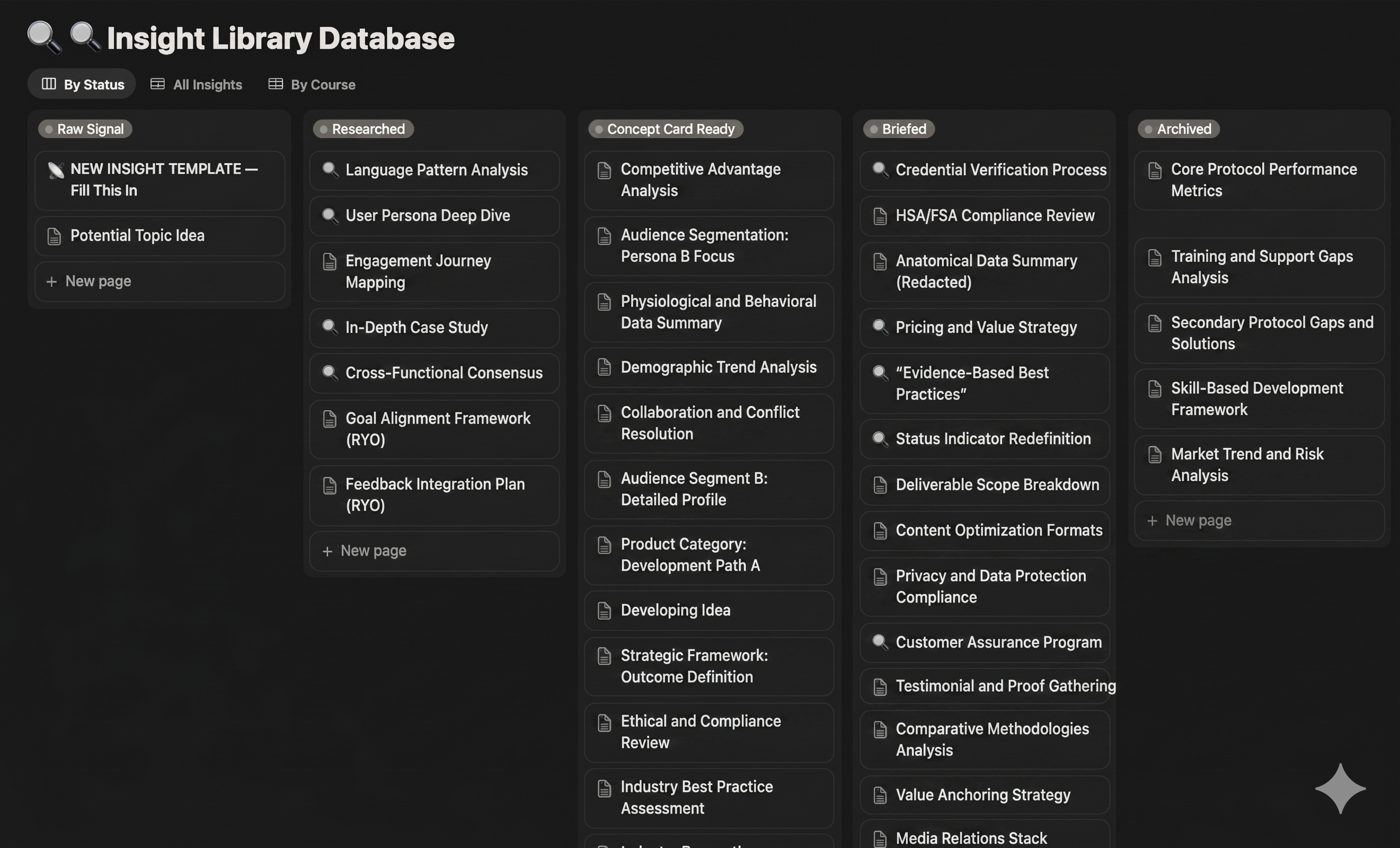
AI is infrastructure, not a shortcut. Claude for insight development, deep research, briefs, and analysis. Manus for creator evaluation and creative research. Every system I build gets documented and lives as an artifact, so the work compounds instead of disappearing when a project ends.
The rest is something I love equally as much as being in the weeds of the data: working with people. Aligning incentives between brand and partners, strategy sessions and collaborative brainstorming across creative, growth, and product. The systems only land if the people around them are bought in on the execution. Watching a concept or an insight turn into something real and profitable — that's the part I take the most pride in.
Click into any project to see the strategy, the system, and the results.
Sole operator of the entire performance creative function inside a regulated sexual wellness app. Insight research through creator management through weekly C-suite reporting — one person, every layer.
One brief into 10+ variants isn't magic — it's architecture. The brief is designed before the shoot to produce multiple assets, each with its own hook, format, and placement spec.
CTR grew from 1.55% to 3.4%+ through a documented iteration loop, not a single winning idea. The patterns that emerged:
Three friends, a food hall on Main Street in Beacon, NY, a window we cut into the bricks ourselves, and a name our chemistry teacher gave us for goofing off. Built from zero, no outside investment, during Covid.
Our chemistry teacher called our friend group "schmucks." We were multi-sport athletes who got our work done but knew how to have a good time. In one of his classes we made ice cream the classic way: salt, ice, cream, sugar in a bag. We even wrote a business plan for a local year-round ice cream shop as an economics project. Four years later, Covid sent us all home from college.
We had time, savings, and a story. We opened Shmuck's as a real business in less than two months from inception. Walk-up window on Main Street, counter inside the Hudson Valley Food Hall. Fresh-pressed waffles, homemade ice cream, local and seasonal ingredients. Nut-free, vegan-friendly, celiac-safe.
We had no budget for traditional advertising and didn't need it. The brand was the marketing. A name like Shmuck's travels on its own: it's funny, it's local, it's a story you want to tell people. We leaned into that.
PR outreach as local kids with a story. Community-first positioning in a town that cares deeply about supporting local. Guerilla marketing by showing up at events, being present, being part of what Beacon already was. Social content that felt like friends sharing something, not a brand advertising.
The Loaded Waffle (a fresh-pressed liege waffle topped with homemade ice cream, maple syrup, and amarena cherries) became the signature. Shareable by design, photographable by nature. User-generated content without asking for it.
Collaborative flavors with Trax Coffee Roasters, Beacon NY · product photography by the team
We had 15+ employees at peak: hiring, scheduling, training, and managing a team from scratch with no prior blueprint. I built every SOP the business ran on: opening and closing procedures, inventory stocking levels, waste tracking, vendor ordering cadences, and recipe systems that let new hires produce consistent product from day one.
Vendor relationships, supplier negotiations, ingredient sourcing, all managed directly. The operational infrastructure was built alongside the brand, not handed to us. Every system was designed and documented by us.
Grand opening · August 2021
You can build a brand on a story and a name before you build anything else. The digital marketing fundamentals I'd spent years applying to other people's businesses (audience, message, channel, conversion) applied just as cleanly to a street-side ice cream window. The context changes. The system doesn't.
After two years and $300K+ in revenue, all three founders made the same call independently: close the business after graduating college and committing to full-time careers. Shmuck's was a proving ground from day one, and it proved everything it needed to.
Tour campaigns that sold out shows. Artist growth from 5K to 25K followers using organic clipping strategies before they were a playbook. 50M+ impressions, 13% CTR, $0.50 CPM on geo-targeted campaigns.
Geo-targeted paid social across every tour market, run as separate local campaigns. Each city got its own creative cut, its own audience build, and a spend curve weighted toward whichever shows were selling through slowest. 13% CTR, $0.50 CPM across the run.
The artists I worked with were operating at Billboard Top 100 scale. At that level the audience is already watching and the algorithm magnifies whatever signal you put into it, good or bad. Campaign timing, targeting, and creative all had to land on the first try.
Grew an emerging artist from 5K to 25K Instagram followers through meme page partnerships and content clipping. The thesis was simple: find where the audience already spends time and put the artist in front of them there, instead of asking them to come somewhere new.
The actual work was cold-DMing meme page admins and anime edit accounts, negotiating post terms one at a time, and tracking downstream streams and follower lift to figure out which placements actually moved the needle. There was no rate card for any of this yet. No industry category. What's now a standard line item in every label's budget was something I was figuring out from first principles.
The system, once it stabilized: source high-engagement pages in the artist's niche, license or trade posts, clip the most shareable moments out of existing content, distribute through accounts that already had the audience. 50M+ impressions through guerrilla distribution that had no template.
Full-funnel paid media for a fashion DTC brand. Meta + TikTok ads, email and SMS automations, on-site CRO.
Jakischrist makes one-of-one high-fashion pieces — handmade, $500 and up, with a level of craft that can’t be replicated at scale. The problem: demand consistently outpaced what could actually be filled. Every drop sold through instantly, but there was no system to capture that demand, grow it deliberately, or convert it into sustainable revenue. The brand had cultural heat and no infrastructure to hold it.
The Ninth Veil drop — multiple sold-out SKUs across $500–$600 outerwear
Rather than trying to scale what couldn’t be scaled, we built around the scarcity. Seasonal product lines gave the brand a release cadence the audience could anticipate. Themed lot drops — curated collections with a defined window and limited quantity — turned demand anxiety into sell-through momentum. Every release since has sold out. The one-of-one pieces became the brand’s identity anchor; the drops became the revenue engine.
The brand was running on Big Cartel — fine for early-stage, not built for what Jakischrist was becoming. I led the migration to a fully integrated Shopify stack: inventory tracking tied to production timelines, content planning and influencer management brought into the same system as the product calendar, and paid media on Meta and TikTok running against properly segmented audiences with creative matched to the drop cycle.
The infrastructure made the drops repeatable. Before, a sell-out was a happy accident. After, it was a designed outcome.
The full breadth of what paid media can do when you apply it across every vertical — photography studios, home services, ecommerce, professional services, events. Each one a different problem, solved with the same underlying system.
Managed paid media for a NY photography studio across event, specialty, and pop-up shoots — effectively four different photographers with four different audiences under one system. Segmented campaigns by shoot type, built creative tailored per segment, and ran a full funnel from cold traffic through booking confirmation. 25K+ leads, $430K+ revenue, $2.96 avg CPL across Meta and Google.
LA's largest masonry company. Hyper-targeted geographic and psychographic campaigns for million-dollar outdoor installation projects. The insight: the audience for a $100,000 outdoor kitchen isn't hard to find — they live in specific ZIP codes, drive specific cars, own their homes. $20 leads that closed into million-dollar projects. That ROAS math is what made me open my own contracting business.
Applied everything I'd learned to my own contracting business. Paid search and social to scale to $130K+ annual revenue. The same targeting precision and landing page discipline I'd been building for clients, now generating my own income while I finished college.
Managed lead generation for 6 franchise locations across salons, lash studios, and women’s beauty businesses. The challenge unique to franchise work: delivering local relevance at national scale. Each location needed geographic targeting precise enough to feel neighborhood-specific, while the messaging and offers had to stay within the brand system the franchisor controlled. I built campaigns that worked within those constraints — local audience signals, franchise-approved assets, location-specific offers — applied consistently across every location simultaneously.
Ran paid media for online education and course businesses — a vertical where the funnel is long, skepticism is high, and creative has to establish credibility before it can sell. Lead quality over lead volume, with content sequences designed to pre-frame the pitch before the landing page ever saw the click.
The funnel is always the same: get attention, earn trust, remove friction, convert. The creative and the channel change. The reason most campaigns underperform isn't the ads — it's what happens after the click. I learned full-funnel by necessity because I couldn't let my clients fail at conversion when the traffic was working.
Statics were the account's least-examined format. UGC and expert video got the iteration. Statics got filler. I rebuilt the entire static discipline as an insight-first system — same pipeline as video — and the account never looked at static creative the same way again.
Static ads were the account's least-examined format. UGC and expert-led video got the research and the iteration. Statics were treated as filler and social proof — a headline, a product shot, a statement, or a dense copy of another brand's "winning" ad.
Performance showed this clearly: top-spending statics averaging 2% CTR. CPAs were high. The format was underperforming not because statics don't work, but because they weren't being briefed with the same discipline as everything else.
Pre-pipeline: visually branded, headline-led, but doing one job at a time. Top performers plateaued around 2% CTR.
I rebuilt static creative as an insight-first discipline using the same theory and pipeline used for video production — owning five stages end-to-end, handing off to design with enough structure that no designer ever asked for a reference ad and every batch delivers a weekly winner.
The key principle: before a hook or headline has ever been delivered to a creator or scaled into more expensive-to-produce formats, messaging gets tested directly against an insight. Each launch is built as a complete creative campaign, a concept-based mix tested across a defined audience or cohort — so we learn what messaging resonates methodically and at volume, not by luck or format-copying.
Owner: Creative Strategist · Handoff: Designer · Review: Legal / Compliance / Stakeholders
Working sessions with the media buying team surfaced a gap the account kept missing: the testimonial layer. The brand ran strong on expert authority and education, but had no first-person customer voice running as paid media. Solution-aware buyers — the ones who'd already watched the expert content — were the largest under-served audience in the funnel.
I built the insight card around what those buyers were actually saying in comments and reviews: "I believe the science. I haven't heard of anyone else using this successfully for my specific problem." That's not an awareness problem. It's a conversion problem — and it needed a specific creative format to solve it.
Signal, audience truth, personas, awareness stage, brand reframe, format hypothesis. One page, one source of truth.
The execution brief translated the insight into a shipping-ready format: 3–4 pull-quote statics, skin-background + white text, attributed to a real person, audience 30–45, solution-aware. No imagery. Specificity as the creative. The brief flagged the blocker upfront: real customer quotes had to be sourced before design could execute.
Regulatory constraints, format spec, directional headlines in the 5-format mix, and a flagged blocker at the top.
Six briefs shipped in the same day just like this, covering six distinct messaging gaps the account wasn't serving: testimonials, money-back guarantee, price vs. competitor anchor, bundle math, expert credentials, and an editorial treatment of paired clinical experts. One working session, one design review, 75+ ads ready for launch.
The women's course launched alongside a prescription bundle with a legal memo attached, derived from compliance reviews, partner audits, and platform constraints: no naming the compound, no outcome guarantees, no competitive medication comparisons, bundle-only framing, banned verbs vs approved verbs. HSA-eligibility claims required LegitScript certification language.
The brief was the audit trail — every claim traced to an approved verb, every expert's credential verified, every regulatory flag captured before design. Compliance wasn't a gate at the end of the process. It was built into the brief structure from the start.
Regulated creative that complies with all reviews, both internal and from partners/platforms. The brief was the audit trail — every claim traced to an approved verb, every expert's credential verified, every regulatory flag captured before design.
Pipeline output: top three statics by CTR from the new briefing system. These formats were three of 75+ launched — finding winners is calculated production, not luck.
A complete insight-driven creative mix in less than 7 days. Six concepts, 75+ unique ads with one designer and no reference ads needed.
Insight-first briefing, not reference-ad translation, is how brands find new audiences at lower CPM. The framework I built is brief structure robust enough that a single designer produced over 75 unique ads in a week without asking for a reference image.
Starting from social listening, customer reviews, and interviews, I turn raw observations into researched insights we can test methodically at volume. That means determining winning messaging and finding new audience cohorts with concept-based launches before ever sending a creator a scripted hook or scaling into more expensive-to-produce formats.
I built my full-stack skill set by taking every opportunity I came across — arbitraging knowledge of digital marketing, customer psychology, and business economics across the measurable and immeasurable parts of brand and advertising.
Performance Creative Strategist & Growth Marketer
845.522.9200 · kellensela@gmail.com · New York / Remote
↓ Download PDF resumeGrowth marketer and performance creative strategist with 9 years and $2.5M+ in ad spend deployed across full-funnel paid media systems. My campaigns have sold out live events internationally, scaled startup & e-commerce brands, built acquisition systems for national service business networks, and delivered 12,000+ trial starts in regulated sexual wellness. I own CRO from end-to-end — research, creative, media buying, attribution, creator ops, landing pages, direct response, and agency/partner management — and I am trusted to report directly to founders and directors with budget and decision authority over the work that ships.
9 years of performance marketing has taken me through music, fashion, food, health tech, home services, and more — and the through-line has always been the same: understand the audience deeply enough that the creative executes itself. If you're building something where that kind of curiosity translates directly into results, I'd be glad to talk.
I'm open to full-time remote roles and NYC hybrid — and genuinely interested in categories I haven't worked in yet.